Return to the Frank Passic
Any photos not otherwise credited are from the personal collection of Frank Passic, Albion Historian.
|
Morning Star, January 23, 2026, pg. 5 The Parker Inn was named in honor of Harry B. Parker (1889-1936), local industrialist and community leader. Parker was the manager, vice-president, and president of the Albion Malleable Iron Company. He served on the city hospital board and donated the land upon which the city hall was erected. He gave to numerous charities in town and financially supported many civic projects. Parker was a major investor in the 1925 subscription drive for the new hotel. When business declined with the onset of the Great Depression and the hotel did not make a profit, Parker assumed several of its financial obligations to help keep it operating. The four-story hotel was constructed in American colonial style, featuring a spacious porch with four great pillars. It contained 71 rooms, all of which were purposely decorated differently. Rooms were priced at $2 and up. Numerous antique-style chairs, beds, chests of drawers and desks were used for furnishings. A heavy Pullman blanket was placed at the foot of each bed. The private bathrooms were fitted with finished white marble and tile. There were 85 telephones in the building, which had its own main switchboard. The public dining room on the east side of the building was built to seat 75 persons. A lunch cost 75 cents, while an evening dinner was $1.25. Sunday dinner was priced at $1.50. The dishes were decorated in the delft blue Mayfair pattern, an old English design of Syracuse China. The glassware utilized a colonial design. The kitchen had a butler's pantry, a dishwasher that could wash 2,500 dishes per hour, and contraptions such as: a vegetable paring machine, an egg boiler with a timing attachment, and an auxiliary ice box that kept the water in all the drinking fountains throughout the hotel cool at all times. The grand ballroom on the west side of the hotel served as the place where many events were held in Albion through the years. It measured 60 by 24 feet, with a seating capacity of 225 persons. The floor was terrazzo and was waxed for dancing. Five ornate chandeliers hung from the ceiling. Nearby was a private dining room. The hotel was originally managed by the Lewis N. Wiggins chain of national hotels. The Parker Inn went through a series of management and ownership changes during its lifetime, the last owner being local architect Frank Dean. After Interstate-94 opened in July 1960, business declined dramatically in the following decade and the hotel was closed in 1970. The building was subsequently remodeled in 1974 into offices and private apartments, and was renamed Munger Place. It was eventually acquired by Albion College which utilizes it for its own needs today. The building stands majestically there today on a hill as one of our local examples of how a building can be restored to grandeur for contemporary use. From our Historical Notebook this week we present an early 1950s postcard photo of the Parker Inn. Here we see that parking was allowed in front on E. Michigan Avenue, with shiny cars pictured here. The sign out front states, "HOTEL PARKER INN Rooms $2.20 UP." Also pictured here is its namesake, Harry B. Parker. It's too bad that the name Parker cannot be restored, considering his prominence and contributions to our community during his era. How many of our readers remember the Parker Inn Hotel, or swimming in its pool in back of the building during the 1960s? 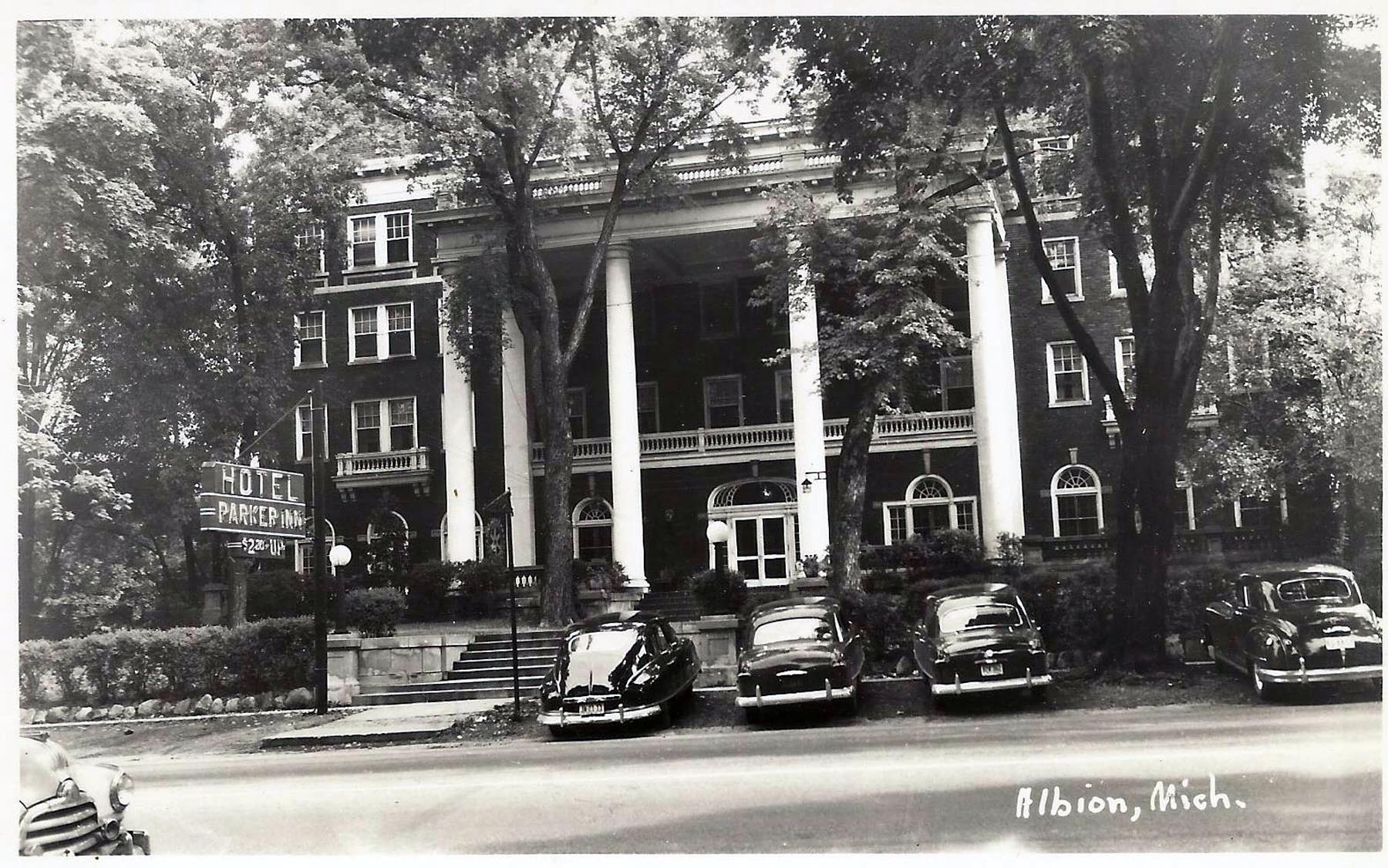 1950s postcard photo of the Parker Inn
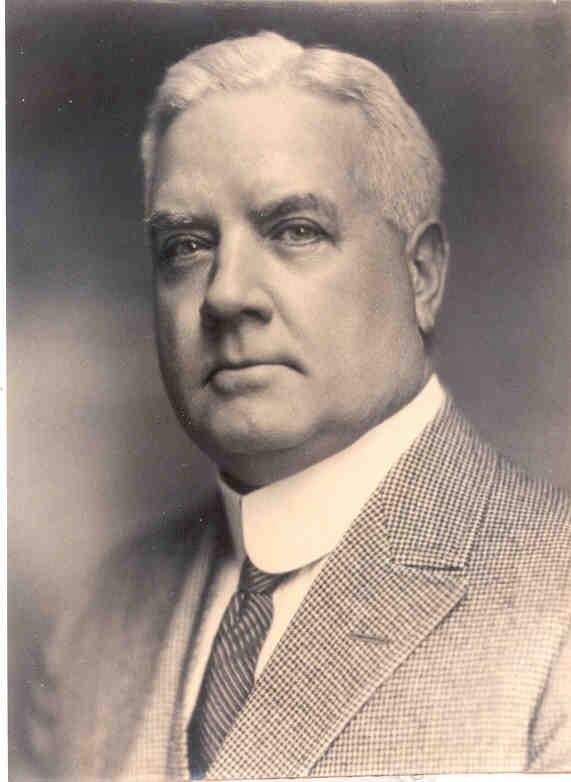 Harry B. Parker
All text copyright, 2026 © all rights reserved Frank Passic | Artwork copyright Maggie LaNoue © 2026
| |